Commercial Storm Damage in University Heights, IN
Storm water drying for University Heights property managers who need the building open and the paperwork in order.
University Heights Water Restoration provides Commercial Storm Damage in University Heights, IN. 24/7 emergency response with IICRC certified crews, and we work with your insurance carrier on approved claims. Call (317) 653-6821 for immediate dispatch.
- Service: Commercial Storm Damage for University Heights homeowners
- Service area: University Heights, IN and surrounding areas
- Response time: Fast local response for University Heights; live dispatch every hour of the year
- Licensed and insured (License #RC21100059)
- Serving University Heights, IN since 2018
Commercial Storm Damage for University Heights Businesses
Water's coming through the roof deck of your University Heights building and the storm has already moved on. Ponded water over a failed drain finds the weakest seam and keeps feeding it long after the rain stops. University Heights Water Restoration sends a crew to commercial water intrusion calls in University Heights, IN within two hours with extraction units, dry in materials, and the moisture readings that tell you how far the water already traveled.
A thermal camera points the crew toward cooler surfaces that may be wet, and a moisture meter confirms which ones are. Scope lines come from meter readings and from what the crew sees through open inspection holes. The camera images are kept too, because they show the outline of the wet area on the day your University Heights floor plan was marked up.
A flooded dock gets worked from the doors inward. Water comes out of the leveler pits and trench drains first, then off the receiving floor. Hard surfaces get washed down before drying equipment is set. Porous materials the flood soaked, such as the carpet in a dock office, come out and get bagged. The whole sequence is photographed for your University Heights file.
Carriers want to know what failed and when. University Heights Water Restoration photographs the roof condition at the breach, the path the water took, and the interior it reached, then dates all of it. On a loss in University Heights that record is what separates storm damage from a long term condition in the adjuster's read, and it gets built on the first visit while the evidence is still there to photograph.
Tenants who still need to work in your University Heights building shape the drying plan, so say so when you call University Heights Water Restoration. The crew builds containment around the wet area and schedules the loud work for after hours. A marked dry route keeps people moving through the rest of the floor.
Signs You Need Commercial Storm Damage Restoration
If you notice any of these in your University Heights building, schedule a free inspection before the issue worsens.
Receptacles on an exterior wall that trip the breaker or show beads of moisture
Floor drains or cleanouts that gurgle or push water up during a heavy rain
Bubbles, blisters, or soft spots underfoot when you walk a low slope membrane
Paint blistering or wall covering bubbling on a wall that backs up to the exterior
A supply diffuser dripping water or showing rust streaks after a storm
Vinyl tile or glue down carpet lifting at the seams out in the middle of a floor plate
Grout between floor tiles darkening in a pattern that spreads a little more each day
Light fixtures out in one zone of the ceiling grid after a storm, with the breaker holding
Interior wall base swelling, delaminating, or pulling away from the gypsum behind it
Fan coil or convector cabinets along a window wall holding water at the bottom
How University Heights Water Restoration Handles Commercial Storm Damage
We follow these steps in order on every University Heights job.
Power and Safety Walk
Before extraction starts, the crew walks the wet areas with your building engineer and confirms which circuits serve them. Cords run through ground fault protection, and the electrician decides what can be reenergized.
Contents and Inventory Protection
Stock and equipment on wet floors get lifted onto blocking or moved to dry ground, with plastic over anything that has to stay. A photo list records what moved and where, which supports each tenant's own claim.
Moisture Mapping
Every affected space gets walked with thermal imaging and both penetrating and nonpenetrating meters. Readings are keyed to a floor plan by room or column line, so the scope covers where the water went and leaves dry areas alone.
Extraction and Debris Removal
Standing water comes off floors with portable and truck mounted units. Saturated lay in tile and wet batt insulation get bagged and hauled out. Water held in the plenum is released through controlled openings so it stops dripping onto tenant equipment.
Structural Drying Setup
Dehumidification is sized to affected cubic footage, desiccant for open floor plates and refrigerant units for enclosed suites. Air movers go in at calculated angles. The crew checks available amperage and brings distribution or generator power when building panels can't carry the load.
Commercial Storm Damage in University Heights
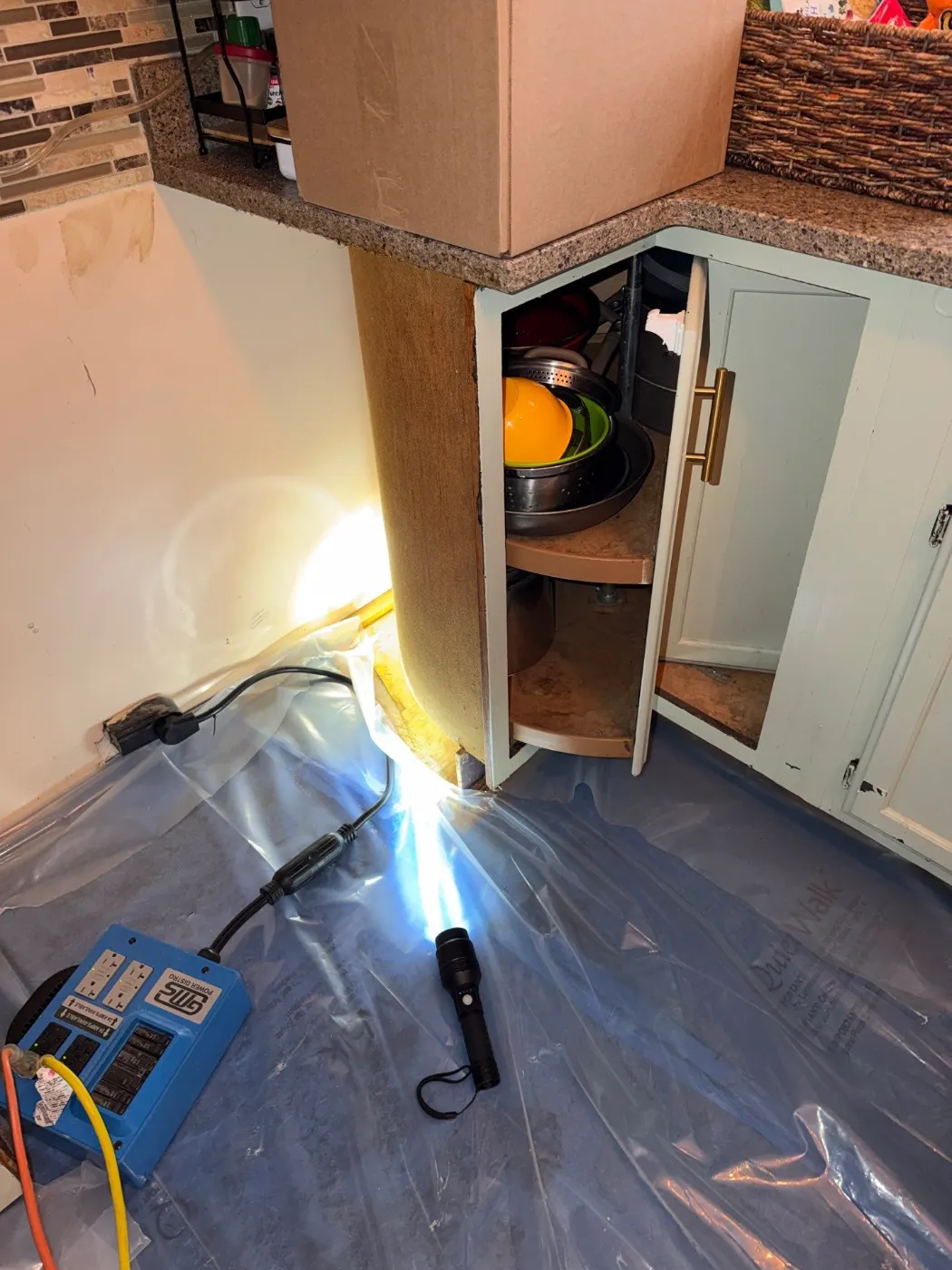
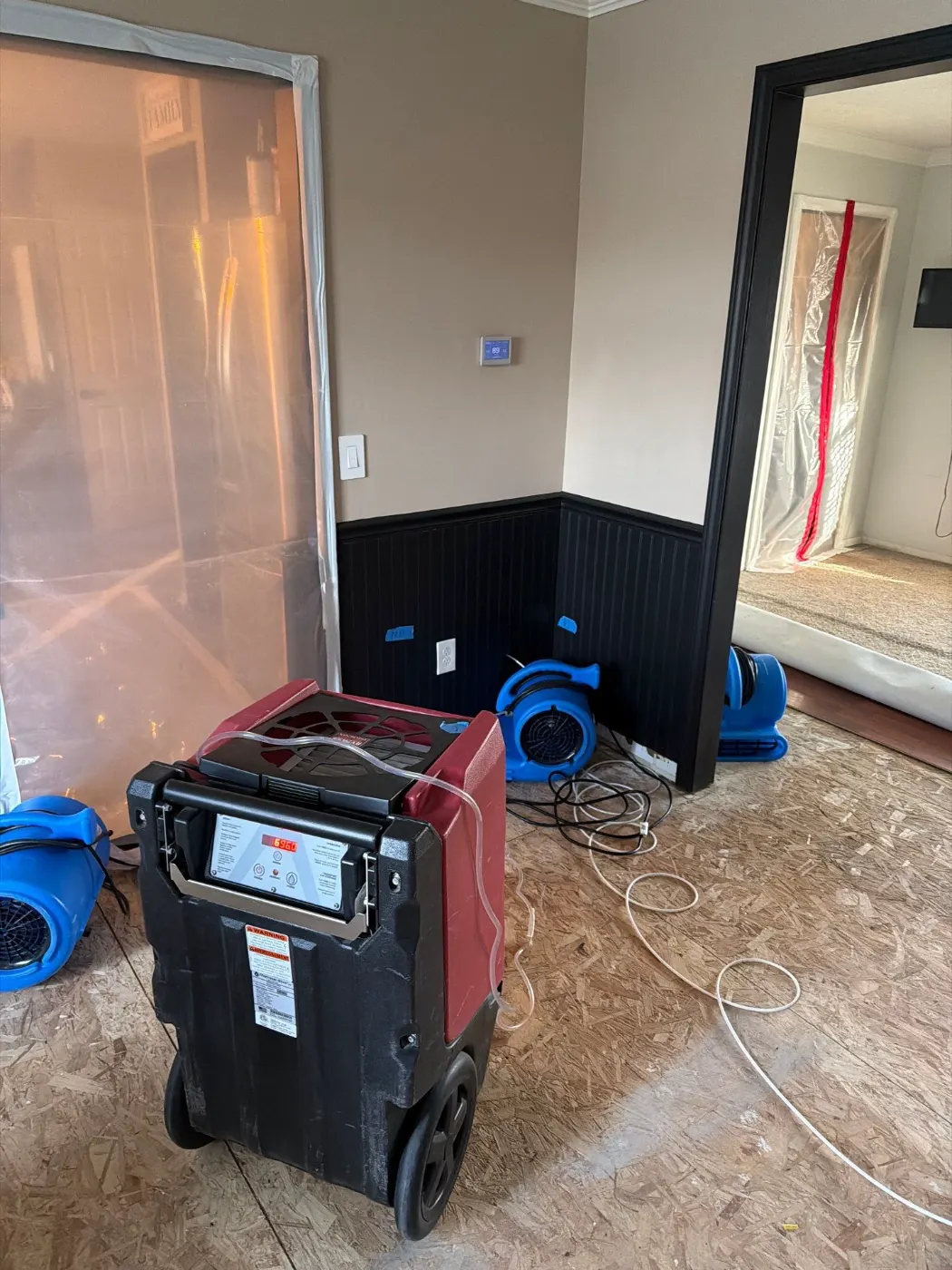
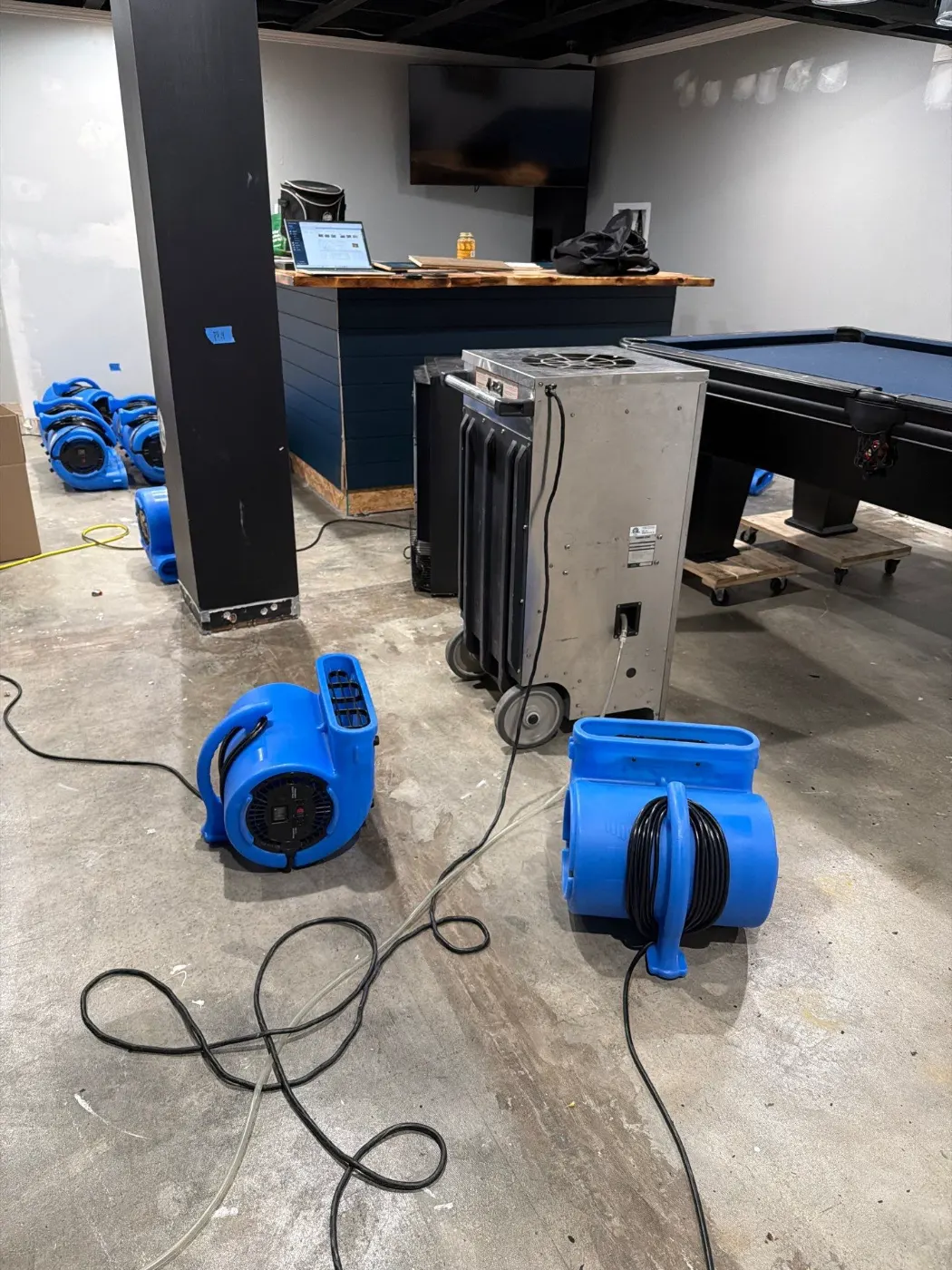
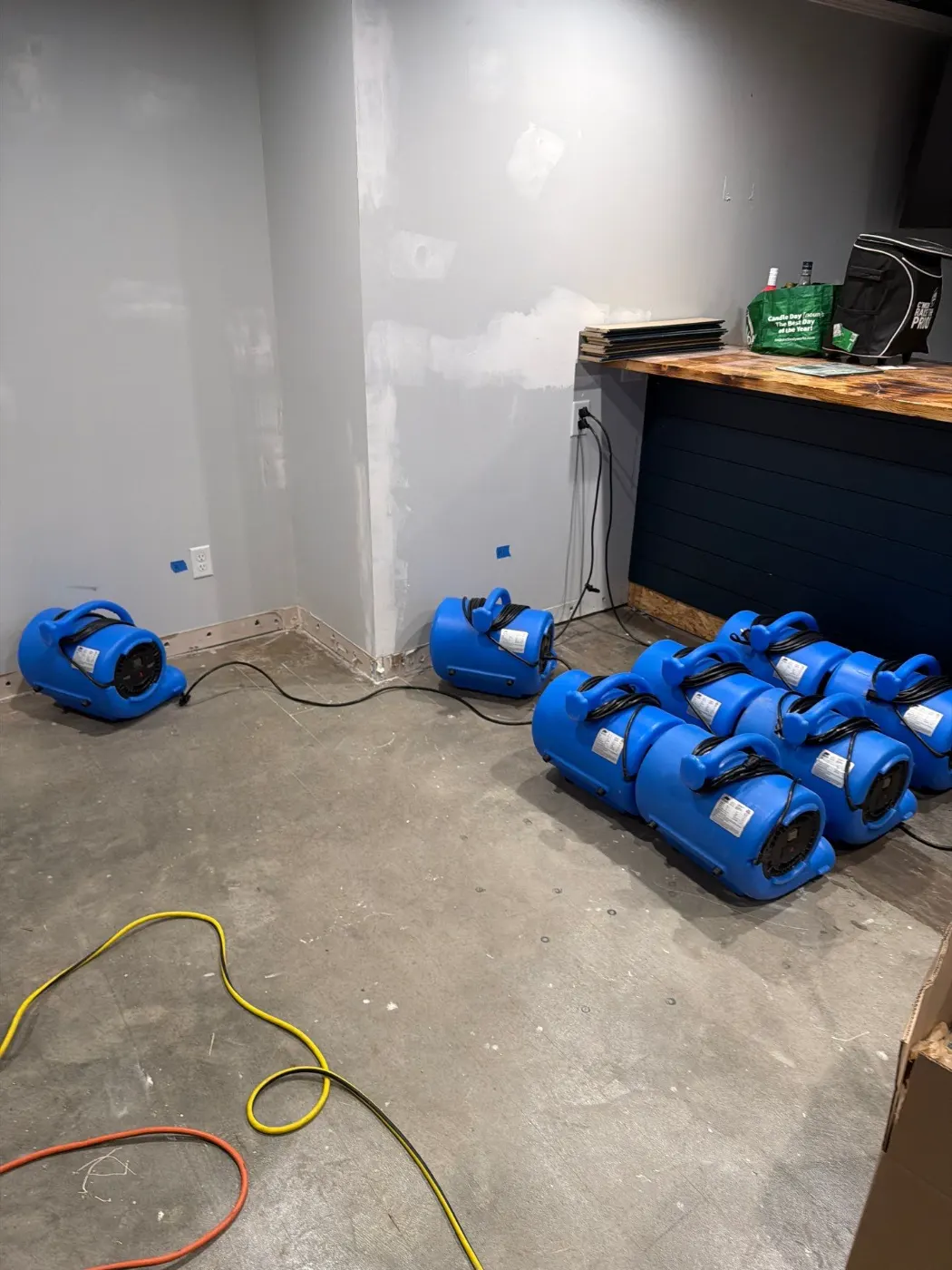
Photographs from real commercial storm damage jobs completed by our crew in University Heights and surrounding areas.
Commercial Storm Damage FAQ
Questions University Heights property managers ask us about commercial storm damage restoration.
Guidance and Standards for Commercial Storm Damage
- The National Weather Service office in Indianapolis posts summaries of recent central Indiana storm and flood events. NWS Indianapolis Event Summaries
- The ANSI/IICRC S500 is the published standard for professional water damage restoration. The current edition is the Fifth Edition, 2021. IICRC S500 Standard
University Heights Neighborhoods We Serve
We take commercial storm damage calls in every part of University Heights. Pick your neighborhood for local details.
Other Restoration Services in University Heights
University Heights Water Restoration handles the full scope of restoration work. Explore our other services below.
Water Damage Restoration in University Heights
24/7 emergency response. IICRC certified water restoration from extraction to full dry out.
Learn more →Basement Flooding in University Heights
Basement water emergencies handled fast. Extraction, drying, mold prevention.
Learn more →Sewage Cleanup in University Heights
Category 3 biohazard cleanup. Full containment, decontamination, structural restoration.
Learn more →Request Commercial Storm Damage Restoration
Reach Us Directly
Our team is available 24/7 for emergencies and ready to schedule inspections during business hours.
Need Immediate Help?
For active water or mold emergencies, call us directly. We are available 24/7.