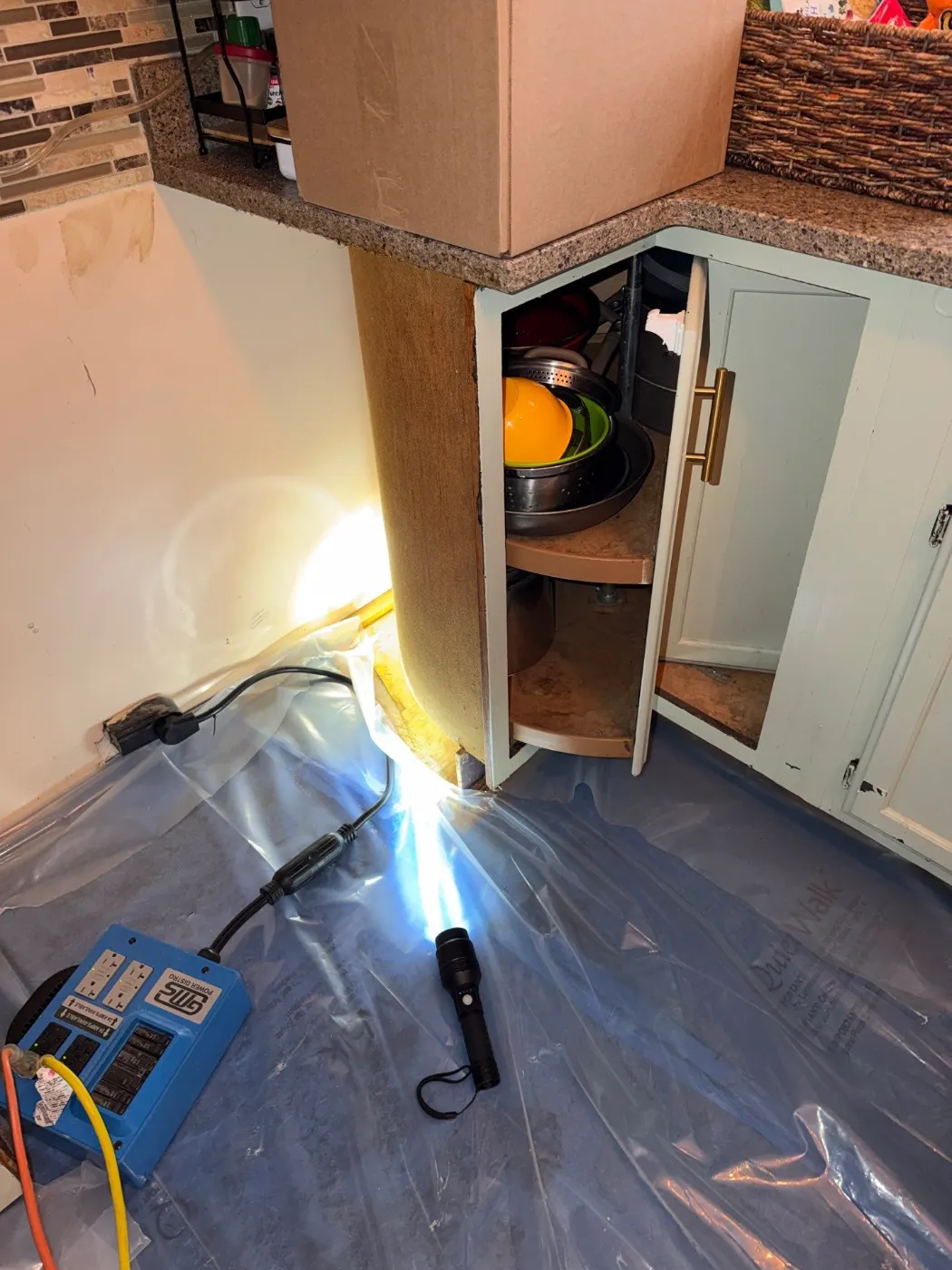
Basement Flooding in University Heights, IN
Basement water in University Heights dried to readings that match unaffected material in the same house, then rebuilt to the scope you approve.
University Heights Water Restoration provides Basement Flooding in University Heights, IN. 24/7 emergency response with IICRC certified crews, and we work with your insurance carrier on approved claims. Call (317) 653-6821 for immediate dispatch.
- Service: Basement Flooding for University Heights homeowners
- Service area: University Heights, IN and surrounding areas
- Response time: Rapid emergency dispatch for University Heights inquiries; crews available 24/7
- Licensed and insured (License #RC21100059)
- Serving University Heights, IN since 2018
Basement Flooding Cleanup in University Heights
We'll pump out and dry a flooded basement anywhere in University Heights, day or night.
Basements Here
Most University Heights homes went up in the 1900s, and full basements are common.
Where the Water Comes From
In heavy storms, sewer water can back up through floor drains, and that turns the job into sewage cleanup.
Our crews work all over University Heights, from South Emerson to the streets near Raymond F. Brandes School 65 and Southern Plaza shopping center on East Street. We also clean up flooded basements in Beech Grove and Garfield Park.
Expert Basement Flooding for University Heights Homeowners
The furnace, the water heater and the electrical panel are usually the lowest equipment in the house, so water on a basement floor in University Heights becomes a safety question first. University Heights Water Restoration dispatches within two hours, and the crew evaluates power at the panel and keeps people clear of standing water near energized equipment before extraction starts. A qualified service technician should check any appliance that's had water in the burner compartment or the controls.
A finished basement in University Heights has more to lose, and University Heights Water Restoration works to keep as much of it as the readings allow. Drywall that wicked water gets cut at a measured height, and walls that only got wet at the base can often dry through small holes behind the baseboard. You see the readings for every wall before anything comes out.
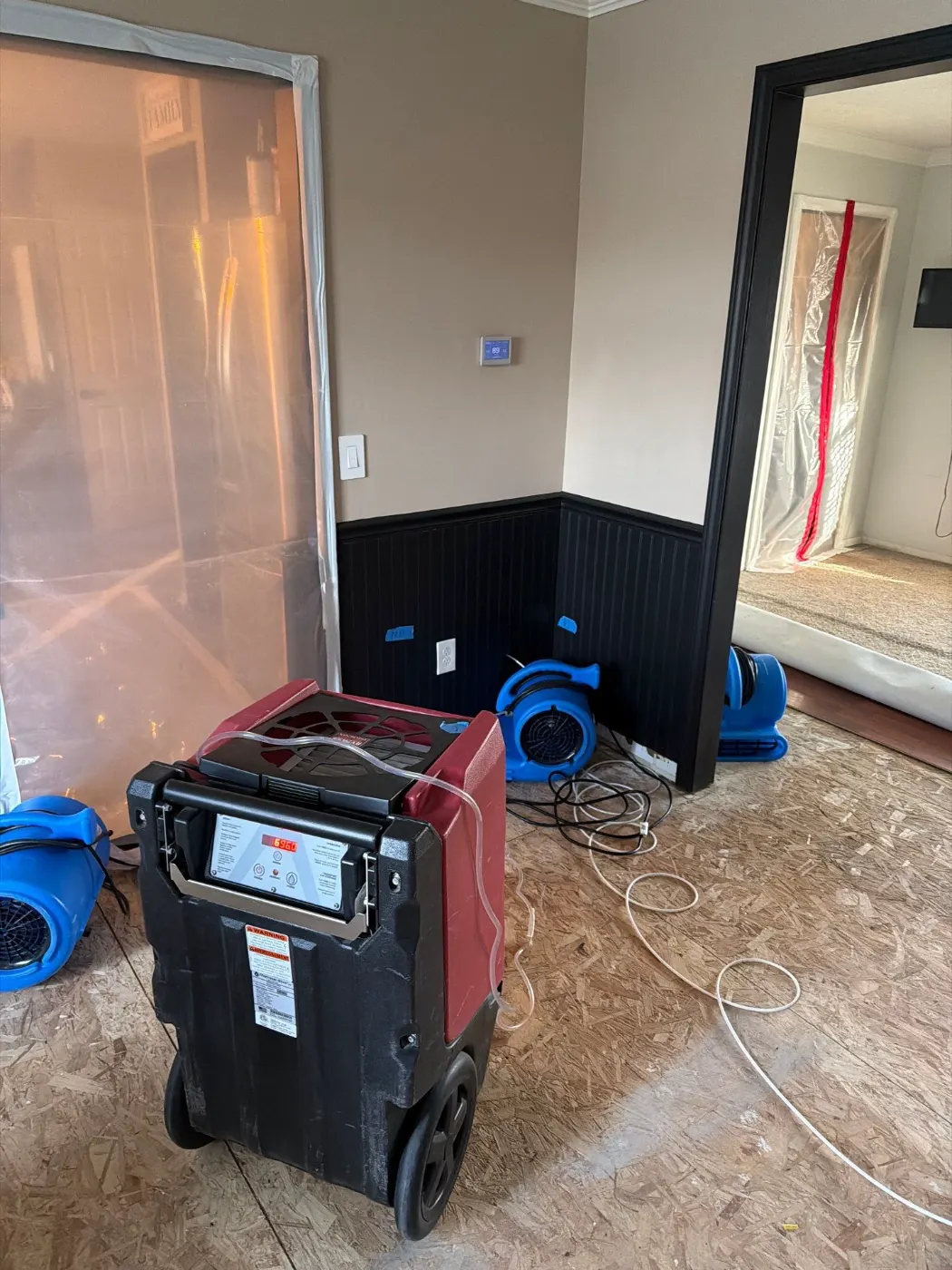
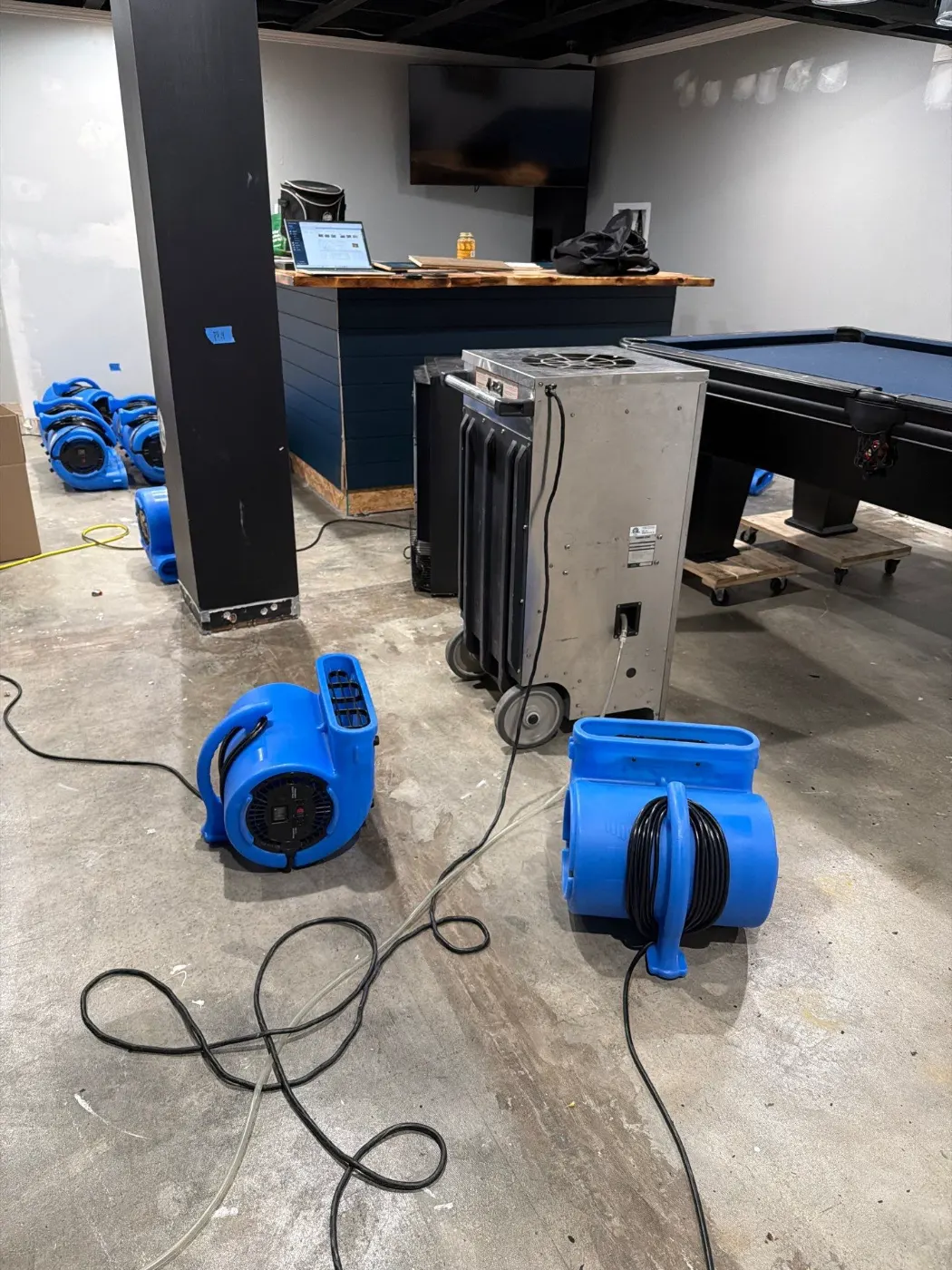
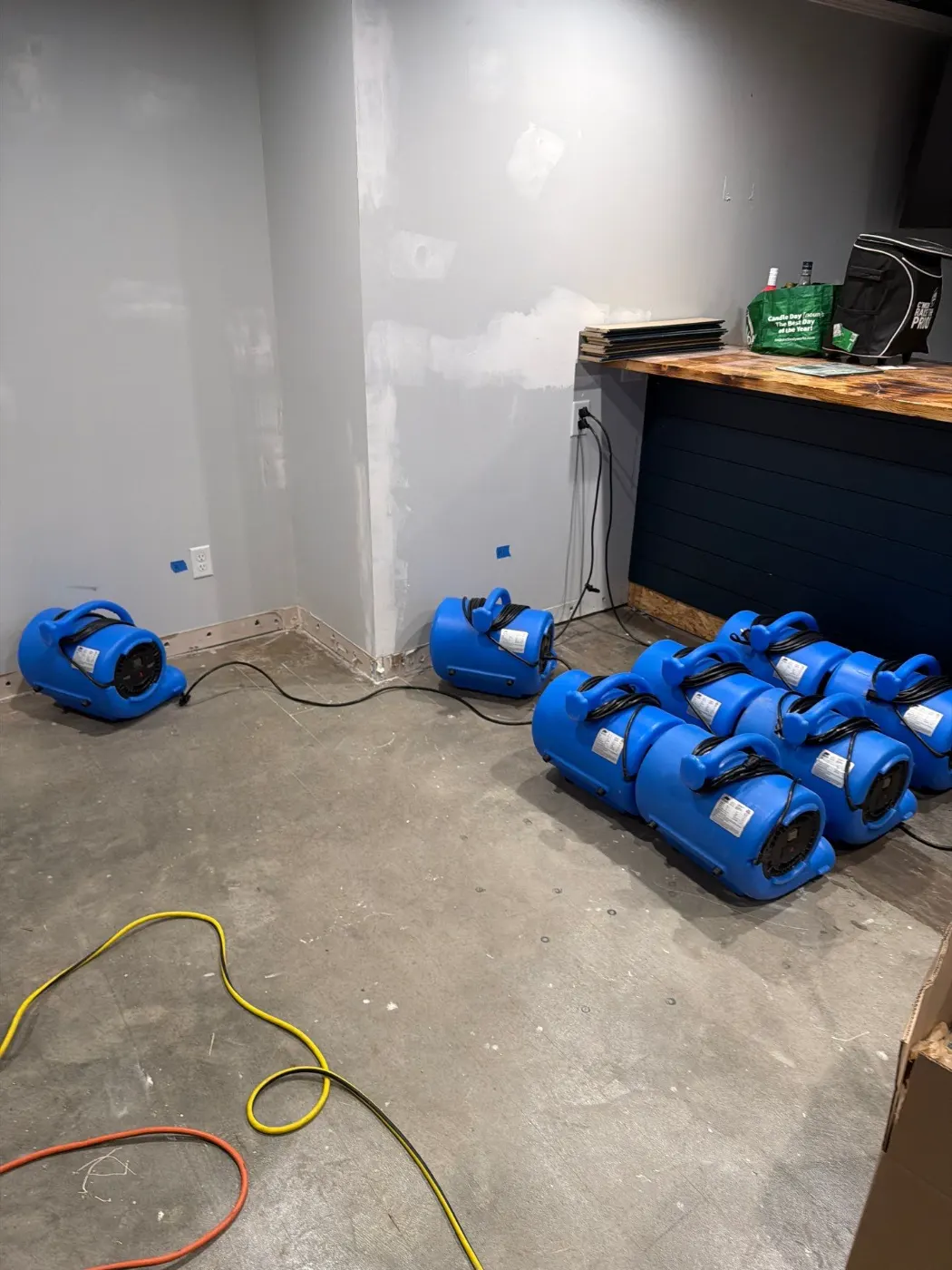
University Heights Water Restoration dries a basement off readings taken on the material itself. Dehumidifiers get sized to the cubic footage of a closed space, air movers get aimed along wet surfaces at angles that keep the boundary layer moving, and the moisture content of the framing plus the humidity in the room gets logged daily. The equipment doesn't come out until the affected materials read what the unaffected ones read in the same house.
University Heights Water Restoration documents the drying and the rebuild as separate scopes, because they're different kinds of work. Extraction, removal, containment, equipment and monitoring sit on the mitigation side. Insulation, drywall, flooring, trim and paint sit on the rebuild side. Keeping them apart shows you exactly what you're paying for on each line, and you approve each scope in writing.
Even with the storm still going, call University Heights Water Restoration and describe what you're seeing in your University Heights basement. The crew can talk through what to move and what to photograph while the rain continues, and the extraction plan gets built around when the inflow slows.
Signs You Need Basement Flooding Cleanup
If you notice any of these in your University Heights home, schedule a free inspection before the issue worsens.
White chalky crust on the block or poured wall where water has been moving through the masonry
Condensation beading on cold water lines while the concrete floor stays dark and cool
A sump pump that cycles every minute or two, which usually points at a failed check valve
Fine silt or mud left in a film across your University Heights basement floor after the water went down
Wall panels or foam board in your University Heights basement bulging outward, with water trapped behind them
Leaves and soil packed into your University Heights window well, with a drain that no longer empties
Horizontal stain line on the walls a few inches above the floor, left by receding water
Water showing up in the same corner of the University Heights basement every time the ground stays saturated
Water pooled around the washer in your University Heights basement after a hose split or a standpipe overflow
Laminate or engineered flooring cupping, with seams lifting in the middle of a plank run
How University Heights Water Restoration Handles Basement Flooding
We follow these steps in order on every University Heights job.
Water Extraction
Submersible pumps take the standing water off the slab, then weighted extraction tools pull what the carpet and pad are holding. Hard floors get squeegeed toward the low point, and water trapped behind baseboard comes out through controlled openings in the wall.
Drying Chamber Setup
Dehumidification gets sized to the cubic footage of a closed space and air movers get placed to sweep the wet surfaces. The basement stays closed while it dries, since outside air in humid weather adds moisture to a cool space with masonry walls.
Wall Cavity Drying
Small holes behind the baseboard let conditioned air flow into the stud bays of a finished wall in your University Heights home. That pulls moisture off the back of the drywall and out of the framing, so more of the wall can stay in place.
Clearance Verification
Final readings get taken on every material that was wet and compared against the same material elsewhere in the house that the water never reached. Equipment comes out after those numbers are documented, and the containment comes down after the equipment does.
Rebuild and Finish
Insulation, drywall, trim, paint and flooring go back in after the clearance readings. The finished work gets walked with you against the scope you approved in writing, and the drying readings stay in your file.
Basement Flooding in University Heights
Photographs from real basement flooding jobs completed by our crew in University Heights and surrounding areas.
Basement Flooding FAQ
Questions University Heights homeowners ask us about basement flooding cleanup.
Guidance and Standards for Basement Flooding
- EPA advises drying water damaged areas and items within 24 to 48 hours to prevent mold growth. EPA: A Brief Guide to Mold, Moisture and Your Home
- Ready.gov notes that homeowners insurance policies don’t cover flooding, so check what your own policy says. Ready.gov: Floods
University Heights Neighborhoods We Serve
We take basement flooding calls in every part of University Heights. Pick your neighborhood for local details.
Other Restoration Services in University Heights
University Heights Water Restoration handles the full scope of restoration work. Explore our other services below.
Water Damage Restoration in University Heights
24/7 emergency response. IICRC certified water restoration from extraction to full dry out.
Learn more →Sewage Cleanup in University Heights
Category 3 biohazard cleanup. Full containment, decontamination, structural restoration.
Learn more →Storm Damage in University Heights
Storm related water emergencies. Tarping, extraction, drying, and full restoration.
Learn more →Request Basement Flooding Cleanup
Reach Us Directly
Our team is available 24/7 for emergencies and ready to schedule inspections during business hours.
Need Immediate Help?
For active water or mold emergencies, call us directly. We are available 24/7.