Commercial Mold Remediation in University Heights, IN
Chronic damp feeding growth in your University Heights building? University Heights Water Restoration corrects the source alongside the remediation to the IICRC S520.
University Heights Water Restoration provides Commercial Mold Remediation in University Heights, IN. IICRC certified crews, scheduled assessment, and a written scope before work begins. We work with your insurance carrier on approved claims. Call (317) 653-6821 to schedule.
- Service: Commercial Mold Remediation for University Heights homeowners
- Service area: University Heights, IN and surrounding areas
- Response time: Inspection scheduled quickly, written scope follows the visit
- Licensed and insured (License #RC21100059)
- Serving University Heights, IN since 2018
Commercial Mold Remediation for University Heights Businesses
If you own both the business and the building, nobody else will decide what to do about the mold, and there may be no facilities team to hand it to. University Heights Water Restoration works with owner operators of shops and offices in University Heights. The moisture readings get explained in plain terms, and the scope goes in writing before any work starts.
Structural wood framing with surface growth calls for judgment. University Heights Water Restoration inspects each stud and joist in your University Heights building for staining and softness. Sound lumber gets abraded back to clean wood, then HEPA vacuumed and wiped. Any piece that's compromised goes to the owner's design professional for a repair decision.
Monitoring continues daily while equipment is running. A crew member checks containment integrity, verifies the negative air machines are still pulling and the HEPA filters aren't loaded, takes moisture readings at the same marked locations, and notes anything that changed. University Heights Water Restoration logs each visit. On a property in University Heights where the work spans a week or more, that log shows the drying progressed while the equipment sat in the room.
Commercial adjusters and their consultants often want to see the work area while containment is still standing. University Heights Water Restoration coordinates site access with you, keeps the enclosure and equipment in place through their visit where the schedule allows and shows the readings as they stand. Documenting the condition before removal makes that visit productive for everyone involved.
If the growth is above the ceiling grid, somebody has to get up there under containment before anything else happens. Call University Heights Water Restoration to schedule the work in University Heights, IN. Crews open the plenum without pushing particulate into the occupied space below, and the findings come back with readings attached.
Signs You Need Commercial Mold Remediation
If you notice any of these in your University Heights building, schedule a free inspection before the issue worsens.
Tenant improvement work that stops because a contractor found dark staining inside a wall
Ceiling tiles bowing in the middle of the span after a week of heavy rain
Snowmelt that pools at an entry threshold and keeps the wall base damp every winter
Door frames and wood casing that have swollen and stained near an exterior entry
Vinyl wall covering bubbling or peeling at the seams, usually worst near the base
A ceiling stain sitting directly beneath an upstairs restroom or break room
Ceiling tiles with staining on the back side that only shows when you lift one out of the grid
Staining on the underside of carpet or pad that shows when a seam lifts
Dark staining along the caulk line behind a janitor sink or restroom fixture
Drywall near the base that dents under thumb pressure or feels spongy to the touch
How University Heights Water Restoration Handles Commercial Mold Remediation
We follow these steps in order on every University Heights job.
Inspection and Moisture Survey
Crews walk the affected area with thermal imaging and penetrating moisture meters, lift ceiling tiles where readings justify it, and open small inspection ports in wall assemblies. The survey defines the real boundary of the growth and identifies where the water is arriving from.
Written Scope and Approval
The University Heights Water Restoration team puts the findings in writing: containment boundary, which assemblies come out, which get cleaned in place, and the moisture source that has to be corrected. The building owner or property manager approves it before any material is disturbed.
Containment Construction
Poly and framing seal the work area off from occupied space, with a decontamination entry built at the access point. Every supply and return register inside the zone gets sealed so the air handling system stops moving air through it. Barriers get inspected before work starts.
HVAC Isolation
The crew coordinates with the building engineer to shut down or rebalance the affected air handler and seals its registers inside containment. Growth inside the unit or on duct insulation gets flagged for your HVAC contractor, and that work gets scoped separately.
Structural Drying
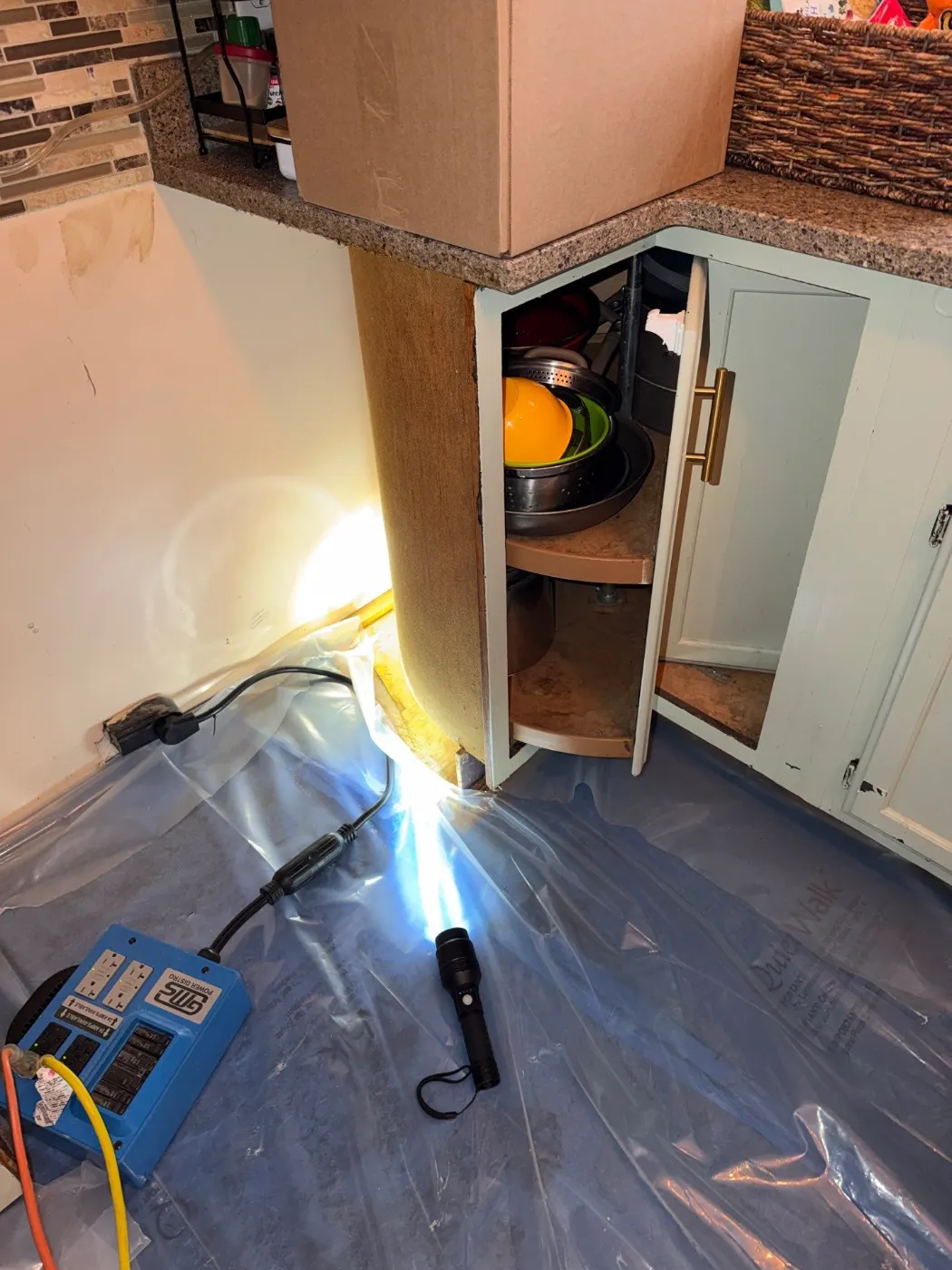
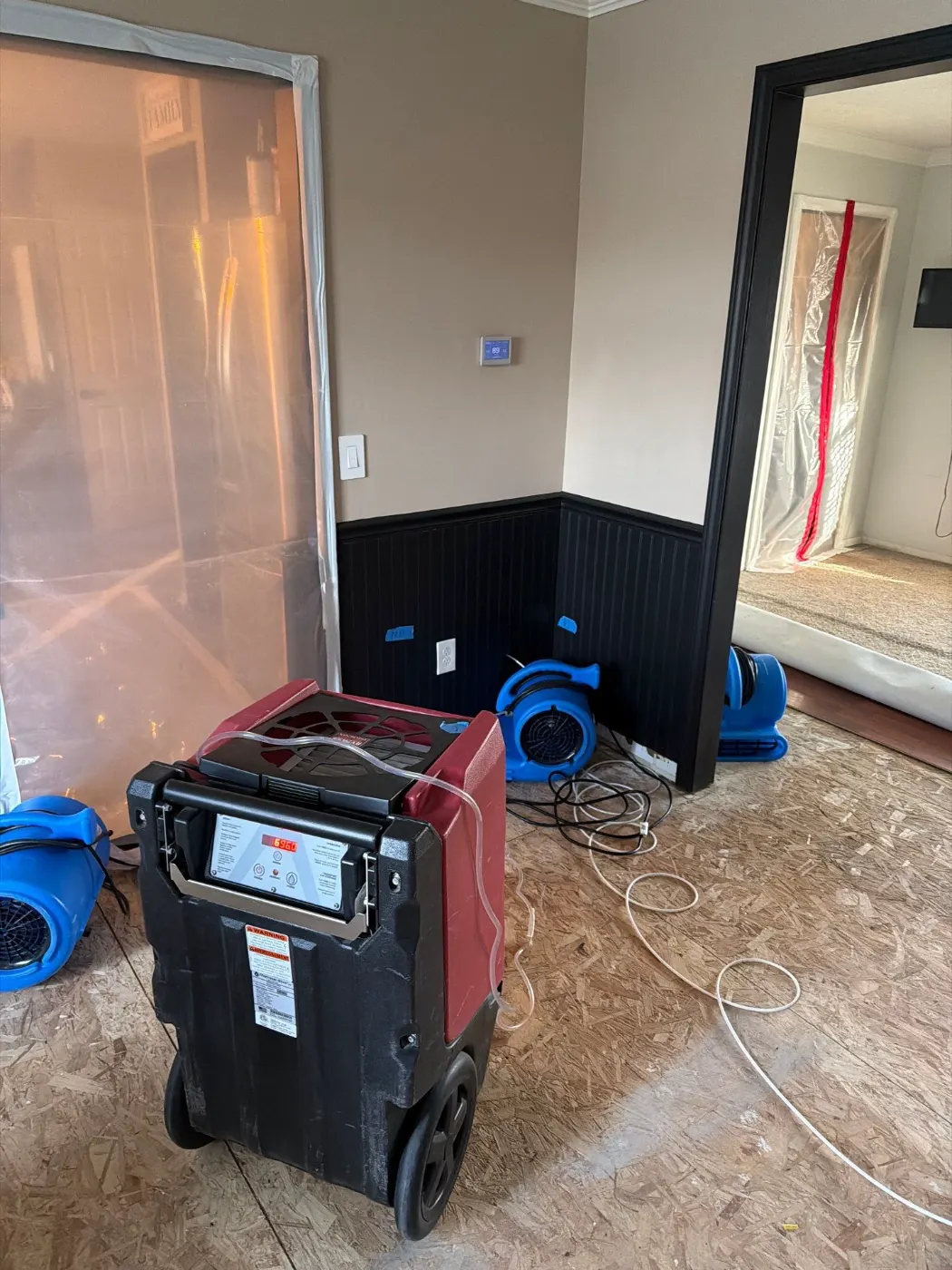
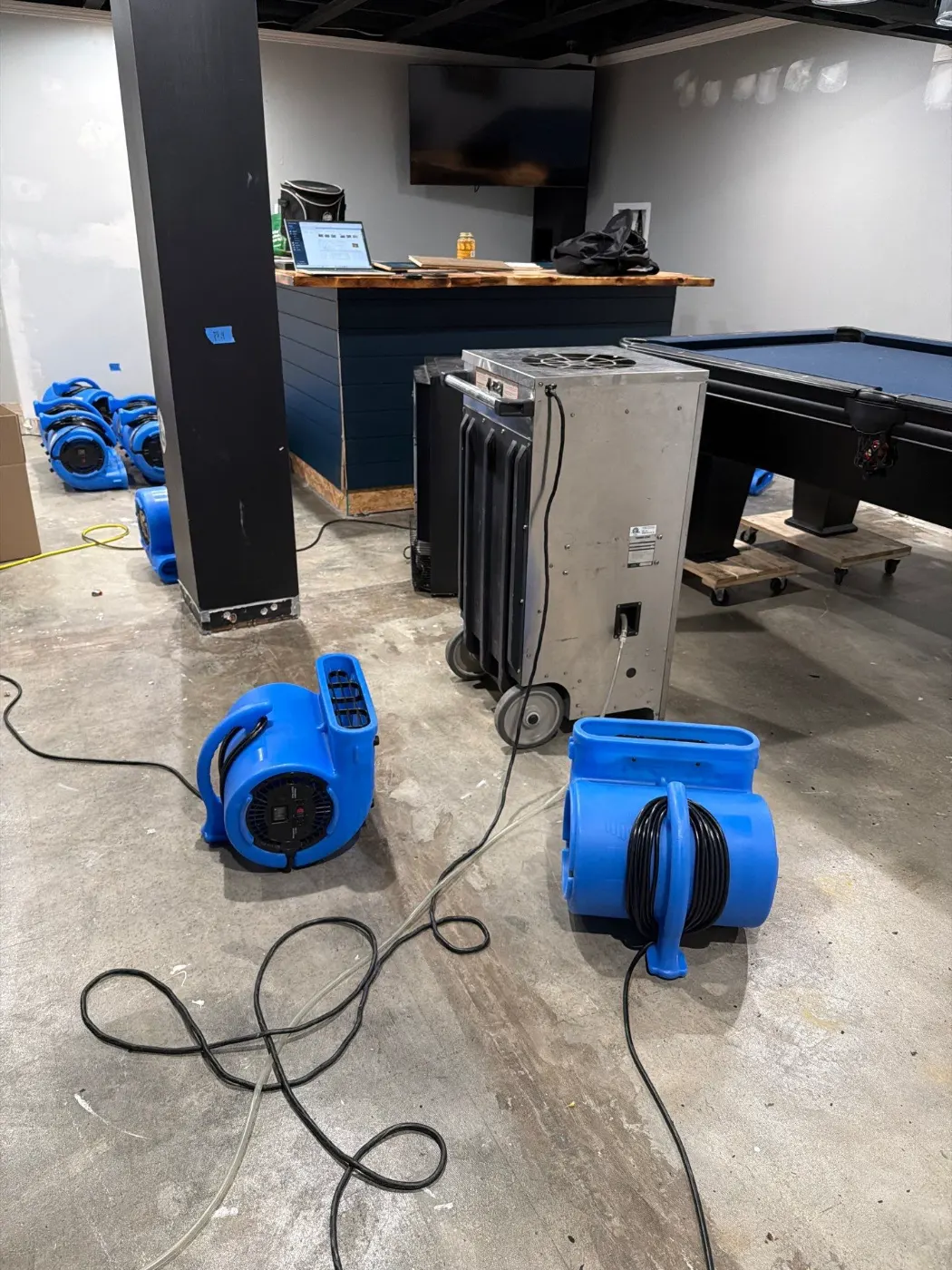
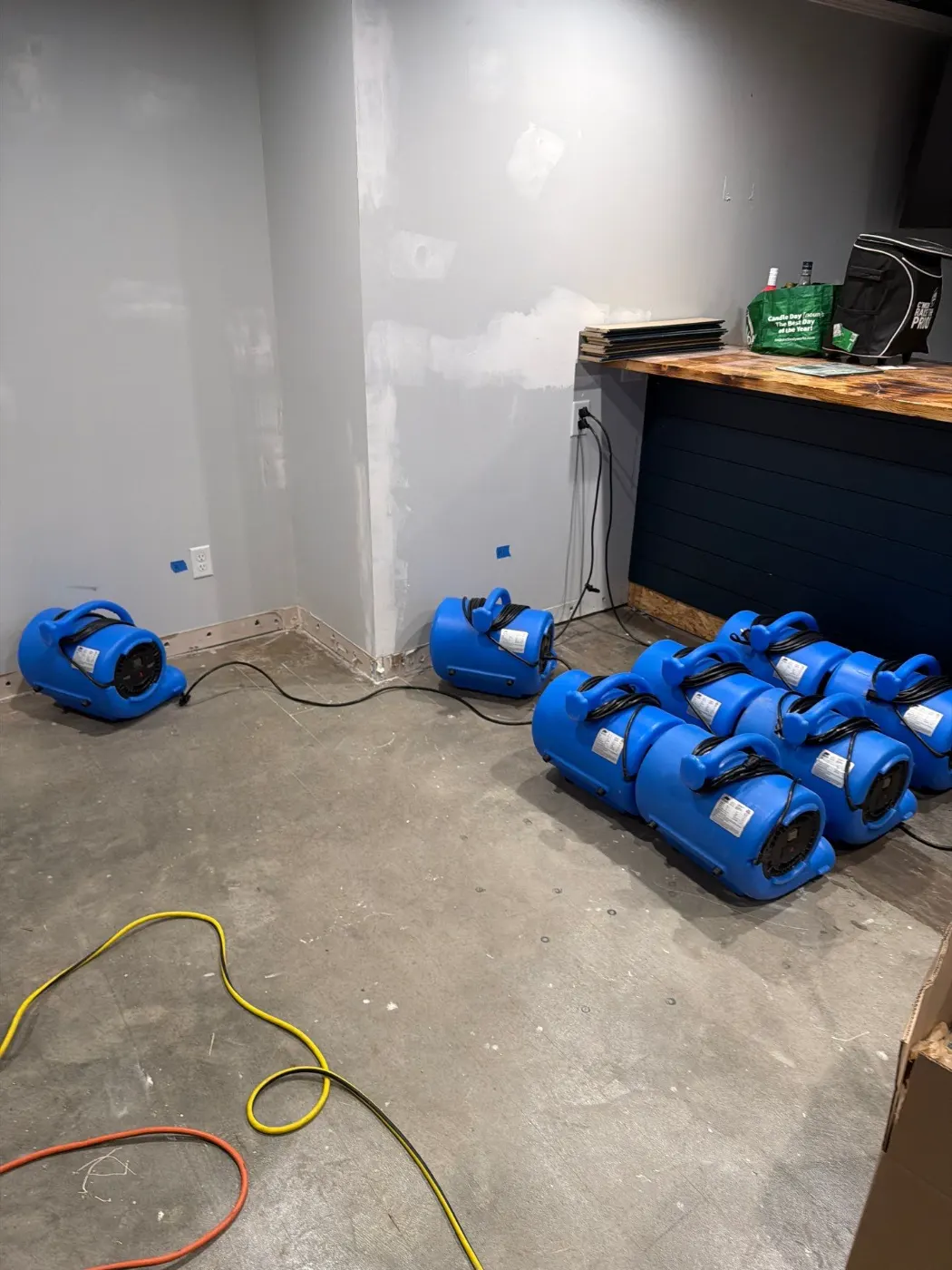
Dehumidifiers and air movers go inside the containment to dry remaining framing and substrate. A technician logs moisture content daily at marked locations. Equipment stays until the readings match unaffected areas of the same building, so nothing gets closed over damp material.
Commercial Mold Remediation in University Heights
Photographs from real commercial mold remediation jobs completed by our crew in University Heights and surrounding areas.
Commercial Mold Remediation FAQ
Questions University Heights property managers ask us about commercial mold remediation.
Guidance and Standards for Commercial Mold Remediation
- The ANSI/IICRC S520 is the published standard for professional mold remediation. The current edition is the Fourth Edition, 2024. IICRC S520 Standard
- EPA’s mold guide says the key to mold control is moisture control. EPA: A Brief Guide to Mold, Moisture and Your Home
University Heights Neighborhoods We Serve
We take commercial mold remediation calls in every part of University Heights. Pick your neighborhood for local details.
Other Restoration Services in University Heights
University Heights Water Restoration handles the full scope of restoration work. Explore our other services below.
Water Damage Restoration in University Heights
24/7 emergency response. IICRC certified water restoration from extraction to full dry out.
Learn more →Basement Flooding in University Heights
Basement water emergencies handled fast. Extraction, drying, mold prevention.
Learn more →Sewage Cleanup in University Heights
Category 3 biohazard cleanup. Full containment, decontamination, structural restoration.
Learn more →Request Commercial Mold Remediation
Reach Us Directly
Our team is available 24/7 for emergencies and ready to schedule inspections during business hours.
Need Immediate Help?
For active water or mold emergencies, call us directly. We are available 24/7.